HTS has identified the top 5 therapy clinical outcome focus areas for 2021 based on our experiences from 2020 which makes us better equipped to overcome COVID-19 related obstacles. Furthermore, after attending a 15-hour training and certification process, HTS management staff have all become “PDPM Masters.” These additional “feathers in our cap” allow us to uniquely champion process improvement initiatives alongside your interdisciplinary team. As HTS continues to identify opportunities for clinical growth, a key process improvement area will be discussed each month.
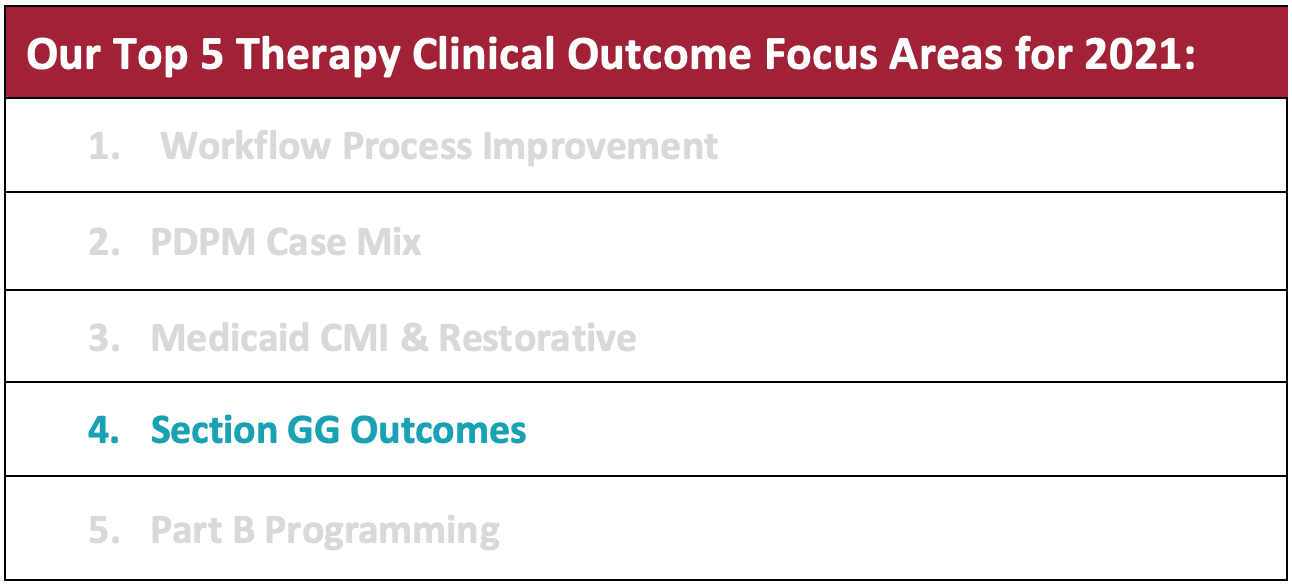
 

This month’s clinical outcome focus area is:

Section GG Outcomes

Analysis of outcomes comes in many different forms. For CMS, outcome data is derived from coding in Section GG of the MDS. As we begin to see more medical review of PDPM claims, we have seen first-hand that section GG and documentation of collaboration of the patient’s usual functional performance is the golden ticket to defend our claims. As information and regulatory standards continue to evolve, HTS has concentrated therapist efforts and education to assure training and documentation standards of care align with Section GG regulations and standards.
Improving communication and processes between departments produces the best Section GG accuracy. The top three ways to improve Section GG Coding include:

1) Therapy use of the HTS Business Intelligence functionality via Net Health’s (formerly known as Optima) operating system provides a detailed analysis of the Section GG Daily Dashboard. This information is then used at the site level to identify facility-specific process improvement initiatives. The dashboard also allows the user to drill to the patient level, identify trends and/or outliers, and action plan as clinically indicated.

2) Facility staff rounding for OBRA ARD communication between the MDS and therapy department will be fine-tuned to assure best GG coding practices across all payors. To meet the state requirements for GG collection for OBRA assessments, processes to collect this information should be effectively communicated. We recommend that all IDT work together when possible, to code usual GG performance. When the therapy assessments align with the ARD, therapists can then contribute GG information for Med B, MGD B, Medicaid, and Private Pay so that collaborative coding is achieved.

3) Review of RAI item set definitions to master the intent of each GG item being coded. HTS encourages all section GG contributors to familiarize themselves with the item set definitions so that coding is as accurate as possible. This review is important because it helps secure proper reimbursement for the care being provided by your team.

  • For example, per the RAI, the admission assessment for wheelchair items should be coded only for residents who used a wheelchair prior to admission. If the patient did not use a wheelchair at prior level of function and declined in the hospital which then required the use of a wheelchair in the SNF, section GG0110 (prior device use) would be coded as “no.” This is coded as such since GG0110 is indicative of use prior to the current illness, exacerbation, or injury. Then, if during the SNF stay the resident is not learning how to self-mobilize using a wheelchair, the 5-day assessment for wheelchair use would also be coded as “no.” This then elicits a skip pattern on the MDS, no goal would be applied, and the answer would remain “no” on the discharge assessment.
As we continue to learn more about medical review focus areas, denials based on lack of supportive GG documentation continues to be an area for improvement. Good communication and processes are imperative to support your coding decisions.

Need a Powerful Therapy Partner? Contact Amanda Green, Executive Director of Strategic Development amanda@htstherapy.com for information about our contract therapy partnerships.
A common challenge that many seniors face is getting a good night’s sleep. As you age, you may notice that you nap more during the day, feel tired earlier at night, have trouble falling asleep, or wake up in the middle of the night and have a hard time getting back to sleep quickly. These issues can cause you to still feel exhausted each morning.

Proper sleep helps your body by improving concentration and memory formation, and allows time for your body to repair any cell damage that occurred during the day.  Also, it allows you to wake up and have more energy to start your day. Research suggests many strategies that can help you overcome any sleep difficulties you might have and encourage a better night’s rest.

Tips to Improve Sleep:

  • Naturally boost your melatonin levels. Avoid artificial light at night by turning off the TV and computer at least one hour before bed.
  • Make sure your bedroom is quiet, dark, and cool. Try using a sound machine, ear plugs, or a sleep mask.
  • Move bedroom clocks out of view. The light can disrupt your sleep and anxiously watching the minutes pass can cause insomnia.
  • Maintain a consistent sleep schedule. Go to bed and wake up about the same time every day, even on weekends.
  • Nap early. Nap early in the afternoon. Napping late in the day may disrupt your nighttime sleep.
  • Exercise. The chemicals released in your body during exercise promote more restful sleep.

How Can Outpatient Therapy Help?

Physical and Occupational Therapists use evidence-based interventions to address sleep issues and promote optimal sleep performance.  Therapy can help by addressing conditions that may be causing poor sleep quality such as pain, decreased range of motion, depression, and anxiety.  Additionally, therapy can help with establishing good bedtime routines, managing pain and fatigue, or addressing other barriers that make bedtime difficult like getting in and out of bed and trips to the restroom at night.

Looking back from 2020, the start of this New Year has been more reflective than most. As an organization, fully “seeing 20/20” in 2021 has been made possible by the clarity gained through the experiences and challenges we all faced last year. In 2020, we relied more on our clinical knowledge than ever before to develop creative solutions for staffing, in-room treatments and utilizing tele technology–all while emphasizing the patient-centered delivery model. Although it is likely that 2021 will bring similar challenges as those from last year, as an industry we know what we are capable of accomplishing. We are also now better equipped to overcome COVID-19 related obstacles with the use of exponentially expanded partner and therapist toolkits, policies, and procedures.

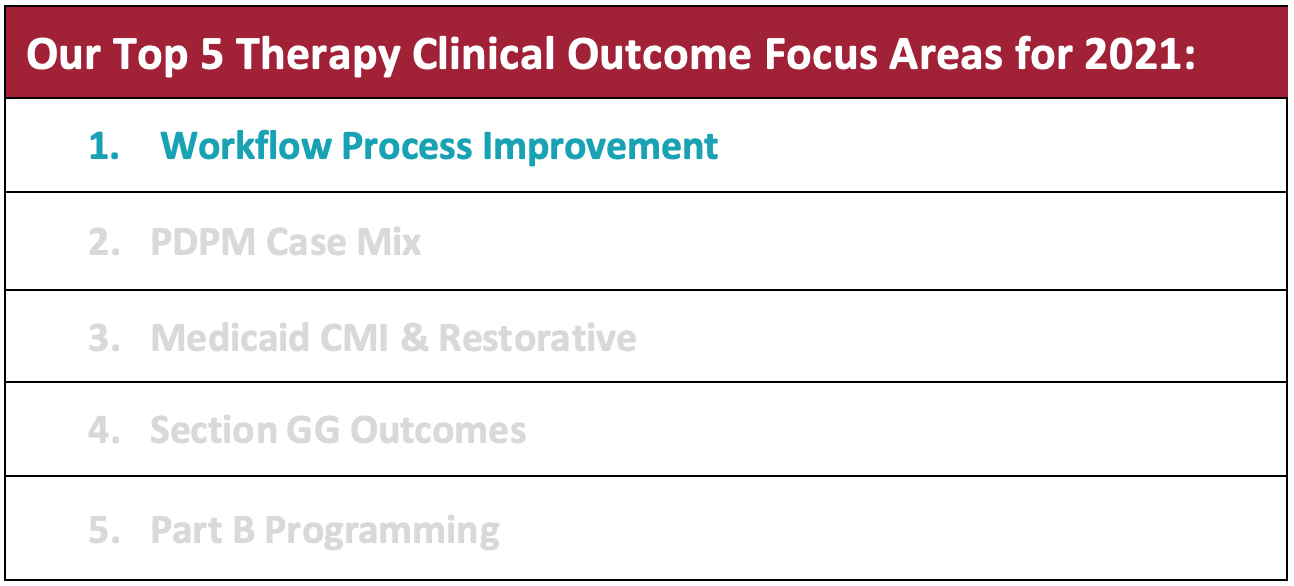
We at HTS have identified the top 5 therapy clinical outcome focus areas for 2021 to improve processes and clinical delivery across the IDT.


This month’s clinical focus area is:

Workflow Process Improvement

Optimizing processes for workflow improvement allows organizations to work smarter and more efficiently. This can be as simple as reducing redundant information sharing to using static agendas and communication tools.

HTS supports our valued partners with a “best practice” workflow system analysis. Our HTS management team is uniquely positioned to facilitate workflow processes to allow more efficient identification for educational and training opportunities. These action items are then used to drive process improvement with the facility’s interdisciplinary team.

Check out the top 3 ways your building can enhance processes for maximum efficiency and coding accuracy. Use of these HTS tools and resources are available exclusively for HTS partners.

1.  Use of the HTS Preadmission Screening Tool

The HTS PDPM Pre-Admission Evaluation Tool is a 3-page screening document that assists care coordinators in capturing clinically indicated patient characteristics to attain a projected PDPM clinical category and per diem rate (available via a rate estimator). This is a great guiding tool for admissions and clinical liaisons to use while gathering information from the hospital record. This tool also assures accuracy with coding. Our interdisciplinary teams have found this tool to be especially useful when capturing NTA comorbidities and CMG classification.

2.  Formalized Meeting Guides

PDPM implementation required system adaptation and modification for success. The PDPM Initial Medicare Assessment Meeting Tool is highly recommended to bring the team together for a guided, patient-specific clinical discussion. Suggested medical record items for interdisciplinary meeting discussion are recommended and a template for documentation of communicated action items is also provided.

Buildings that have implemented use of this specific tool have observed a marked improvement in the quality of communication. Additionally, they specifically saw an increase in timeliness when querying the physician and an improved ability to capture NTA comorbidities. Providing a standardized and formalized platform to determine usual performance for Section GG has also streamlined consistency across the record. Our partners agree this is definitely a “must have” for PDPM meetings.

We also recommend use of a weekly Medicare Meeting Form to provide a more structured, formal discussion of patient specific clinical complexities. The HTS Medicare Meeting Form which was revised in 2020 paired with use of the Medicare Meeting Discussion Guide ensures all attendees are present, timely, and prepared to stimulate discussion with the team.

3.  Optimization of IDT Communication to Achieve Consistency Across the Medical Record

“Consistency across the record” is one big component all providers strive to achieve. This consistency is primarily accomplished by effective interdisciplinary communication. MDS coding lacking supportive documentation puts a claim at risk for medical review, which could negatively impact reimbursement.

Rate setting, captured by coding on the MDS, involves a team approach to integrate systems in order to achieve reimbursement appropriate for the patient’s clinical complexities. For example, Section GG requires multiple disciplines between days 1-3 to determine the usual functional performance. Simply attaining function scores from one discipline, such as only nursing or only therapy, puts the claim at risk for medical review. Furthermore, coding that is not supported by documentation within the chart is another risk factor for medical review.

Since Section GG contributes to 3 of the 5 components of the PDPM rate, effective GG function score procedures are imperative for success under PDPM. Some great solutions are available within the Section GG Workflow Resources section of our PartnerHQ portal. Tools such as the Function Score Quick Tips are also available to optimize processes in your building to minimize medical review risk and achieve consistency across the medical record.

Need a Powerful Therapy Partner? Contact Amanda Green, Executive Director of Strategic Development amanda@htstherapy.com for information about our contract therapy partnerships.
HTS has identified the top 5 therapy clinical outcome focus areas for 2021 based on our experiences from 2020 which makes us better equipped to overcome COVID-19 related obstacles. Furthermore, after attending a 15-hour training and certification process, HTS management staff have all become “PDPM Masters.” These additional “feathers in our cap” allow us to uniquely champion process improvement initiatives alongside your interdisciplinary team. As HTS continues to identify opportunities for clinical growth, a key process improvement area will be discussed each month.


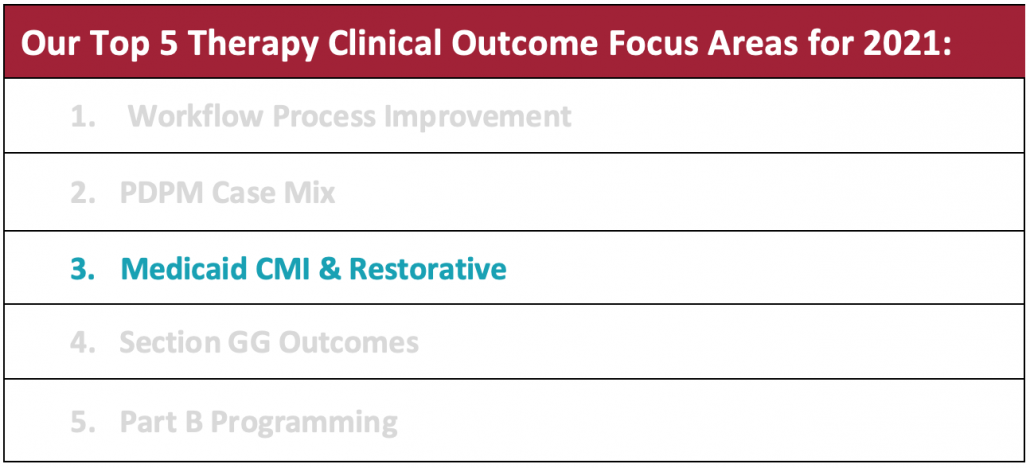
This month’s clinical outcome focus area is:

Medicaid CMI

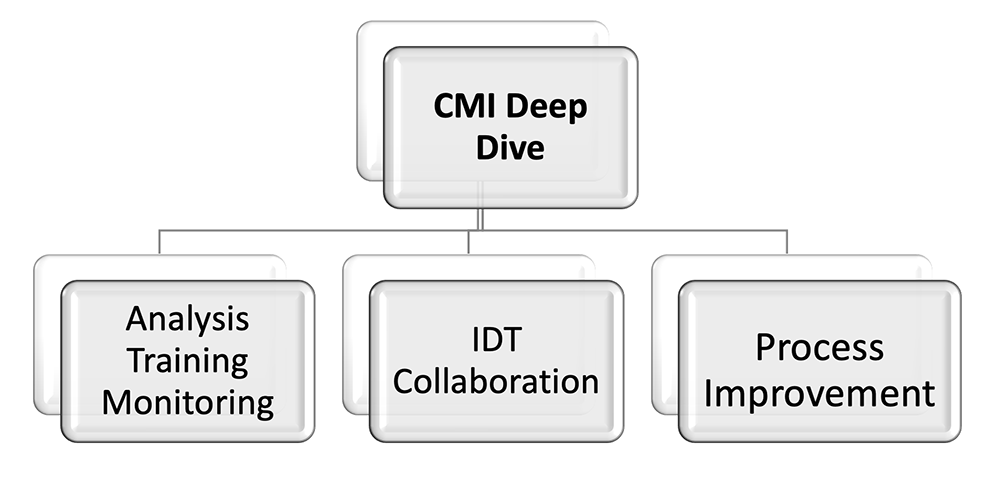
HTS has made it our goal to partner with our clients in every facet of the skilled nursing facility – not just within the walls of the therapy gym. Through business review meetings and discussions with HTS therapists and regional directors, we have become aware of the need for a more detailed look at Medicaid CMI. The HTS team immediately went to work to create a deep-dive analysis program. Now, HTS management is able to apply operational, clinical, and strategic insight to provide solutions to help our clients efficiently assign a dollar value to the treatment of Medicaid patients that is consistent with medical needs. HTS is here to serve you as a facilitator of opportunity and process improvement initiatives through a Medicaid CMI Deep-Dive. Medicaid CMI success is achieved through a three-pronged approach:

Medicaid CMI Deep-Dive Services currently available to HTS Clients

HTS management completes report interpretation at the site level by analyzing data provided within the Time-Weighted CMI Resident Roster Report. A summary of potential vulnerabilities and opportunity areas are identified and reported to the interdisciplinary team. Opportunities are then discussed and assigned to a process improvement champion. Timeframes are designated to keep the team on track with system development. CMI information is then tracked on a quarterly basis to show benchmarking and trends. This value-add service comes with a standard rate of $500. However, for HTS clients, this proprietary deep-dive is offered as a complimentary service.

See below for additional step-by-step details of the deep-dive process:

  1. The Time-Weighted CMI Resident Roster Report for the last 4 quarters are requested.
  2. Reports are interpreted and analyzed by the HTS Management Team
  3. A site-specific, customized presentation of Medicaid CMI data analysis is provided. Opportunities for Medicaid CMI improvement are identified and discussed.
  4. Medicaid CMI data tracking continues as reports are received.
  5. HTS Regional Directors are your “boots on the ground” to facilitate process improvement initiatives.

Need a Powerful Therapy Partner? Contact Amanda Green, Executive Director of Strategic Development amanda@htstherapy.com for information about our contract therapy partnerships.
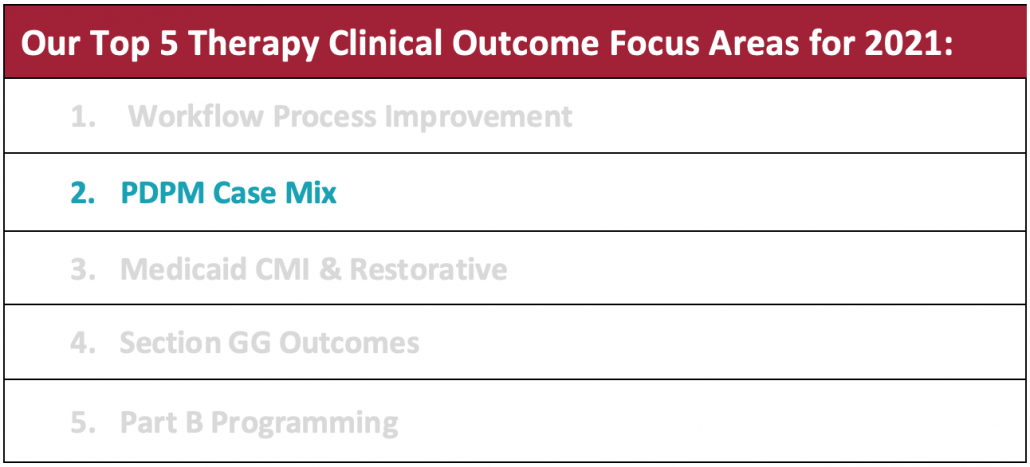
HTS has identified the top 5 therapy clinical outcome focus areas for 2021 based on our experiences from 2020 which makes us better equipped to overcome COVID-19 related obstacles. Furthermore, after attending a 15-hour training and certification process, HTS management staff have all become “PDPM Masters.” These additional “feathers in our cap” allow us to uniquely champion process improvement initiatives alongside your interdisciplinary team. As HTS continues to identify opportunities for clinical growth, a key process improvement area will be discussed each month.


This month’s clinical outcome focus area is:

PDPM Case Mix

“It’s not enough to be providing excellent patient care anymore. Under PDPM, if you don’t code correctly on the MDS, you’re not going to get credit for it.” – Sheena Mattingly M.S., CCC-SLP, RAC-CT, HTS Director of Clinical Outcomes.

HTS has identified 5 areas of opportunity to improve PDPM Case Mix. Let’s take a deeper-dive by discussing the 5 areas of attack to optimize PDPM case mix classification coding.

1.  Assure good communication and collaboration of the function score (Section GG) which drives the nursing, and PT/OT CMG classification.

At this point we are all aware of Section GG’s impact on Medicare reimbursement under PDPM, but odds are we still need some fine tuning. Review current processes for attaining Section GG coding to assure IDT collaboration of usual performance is documented and available within the medical record. Section GG is of utmost importance not only for PDPM reimbursement but also for Quality Measures, SNF QRP, and 5-Star Rating.

2.  Review your facility’s process for querying the physician to capture any coding opportunities. HTS recommends use of our Initial Medicare Meeting Tool.

Imagine this all too familiar scenario, the speech-language pathologist (SLP) in your building identifies a newly admitted patient has aphasia. This SLP then brings this information to the Initial Medicare Meeting and presents her findings. The IDT agrees and proceeds to query the physician for a diagnosis so that the aphasia is considered active within the 7-day lookback period and can be coded in section I4300 of the MDS. This example of excellent communication results in a more accurately coded MDS that is reflective of the patient’s clinical needs. More specifically, the coding opportunity identified is counted as a SLP-Related Condition in the SLP PDPM “bucket” which is directly tied to PDPM reimbursement.

3.  Use the HTS IMA SLP Component Communication Tool.

This tool is to be assigned to be completed by a SLP or an OT. It is designed to be used to identify potential coding opportunities from the SLP’s or OT’s skilled perspective. The opportunity can then be presented to the IDT for discussion. Prior to PDPM, components such as Section K of the MDS or coding of a mechanically altered diet did not correlate to a rate setting. Now, we do get “credit” for these types of clinically indicated coding opportunities which means communication is key.

4.  Use the HTS Nursing Case-Mix Classification Quick Tip Handouts which is available to HTS Partners on the PartnerHQ Web Portal.

Each nursing component Quick Tip Handout is paired with a HTS High Impact Webinar available on demand on the PartnerHQ Web Portal. For example, when reviewing the Special Care High Quick Tip Handout, you will see that a commonly overlooked classification item may be a patient with COPD. If this patient has shortness of breath while lying flat and this is documented within the medical record, this patient would classify as Special Care High versus Physical Functioning. There are several Quick Tip Handouts. They are a one-page resource that aide in familiarizing yourself with the details of the components for each nursing classification.

5.  Rely on the HTS therapy department for key performance indicator data analysis.

HTS Therapy Rehab Managers use a PDPM Analytic Business Intelligence Dashboard which is powered through Net Health Therapy (formally known as Optima). This report is pulled on a weekly basis to identify areas of opportunity. An action plan is then discussed with the therapy team and the HTS Regional Director is also consulted to drive process improvement. Key performance indicators analyzed include but are not limited to:

  • PDPM Covered Day Count and Patient Count
  • Case Mix Group Distribution
  • Treatment Minutes per Visit
  • PT/OT/ST B Units per Visit
  • Section GG Outcome Data

Need a Powerful Therapy Partner? Contact Amanda Green, Executive Director of Strategic Development amanda@htstherapy.com for information about our contract therapy partnerships.